Demystifying Heat Pumps: Beyond the Marketing and Into Reality
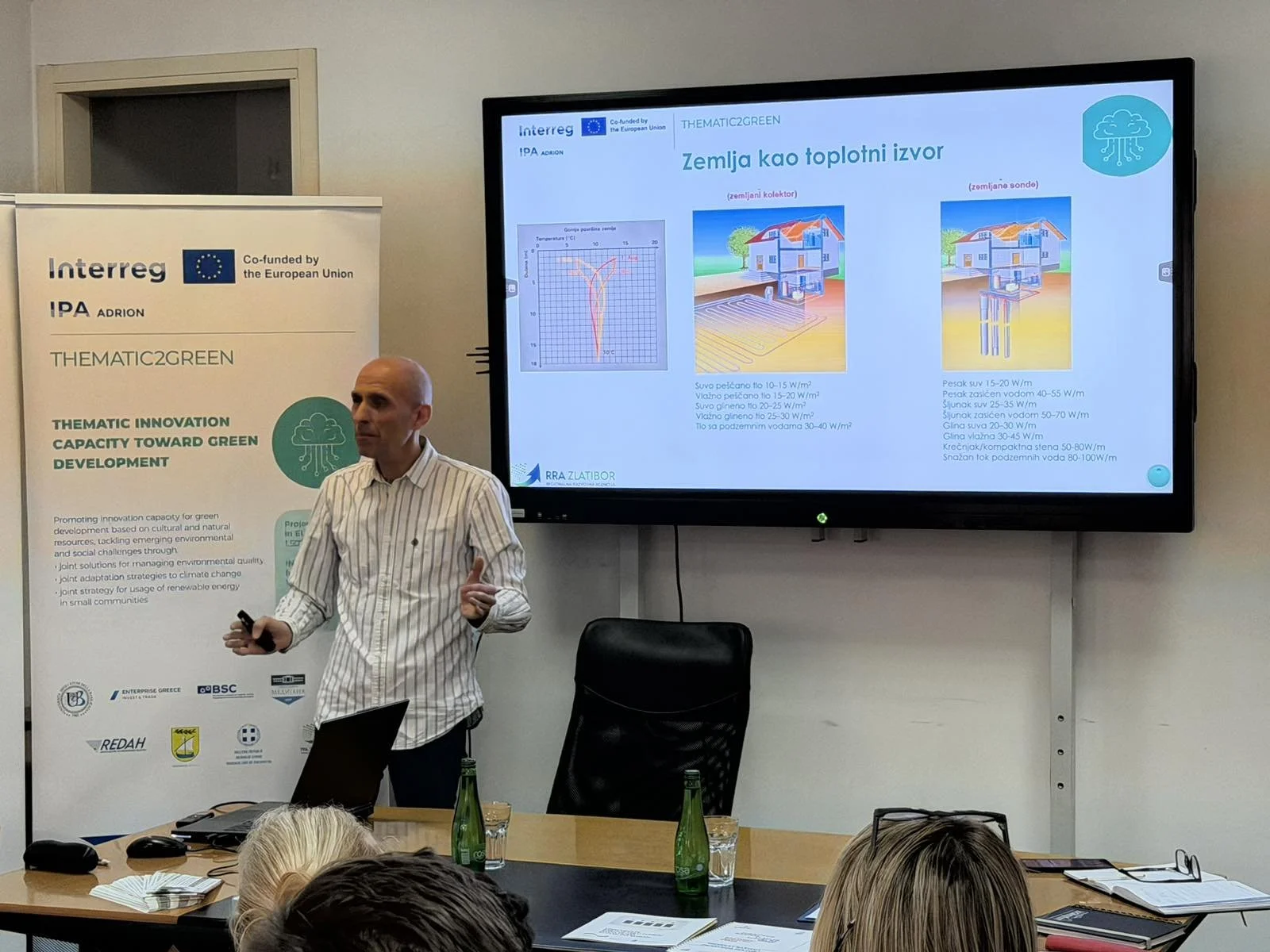
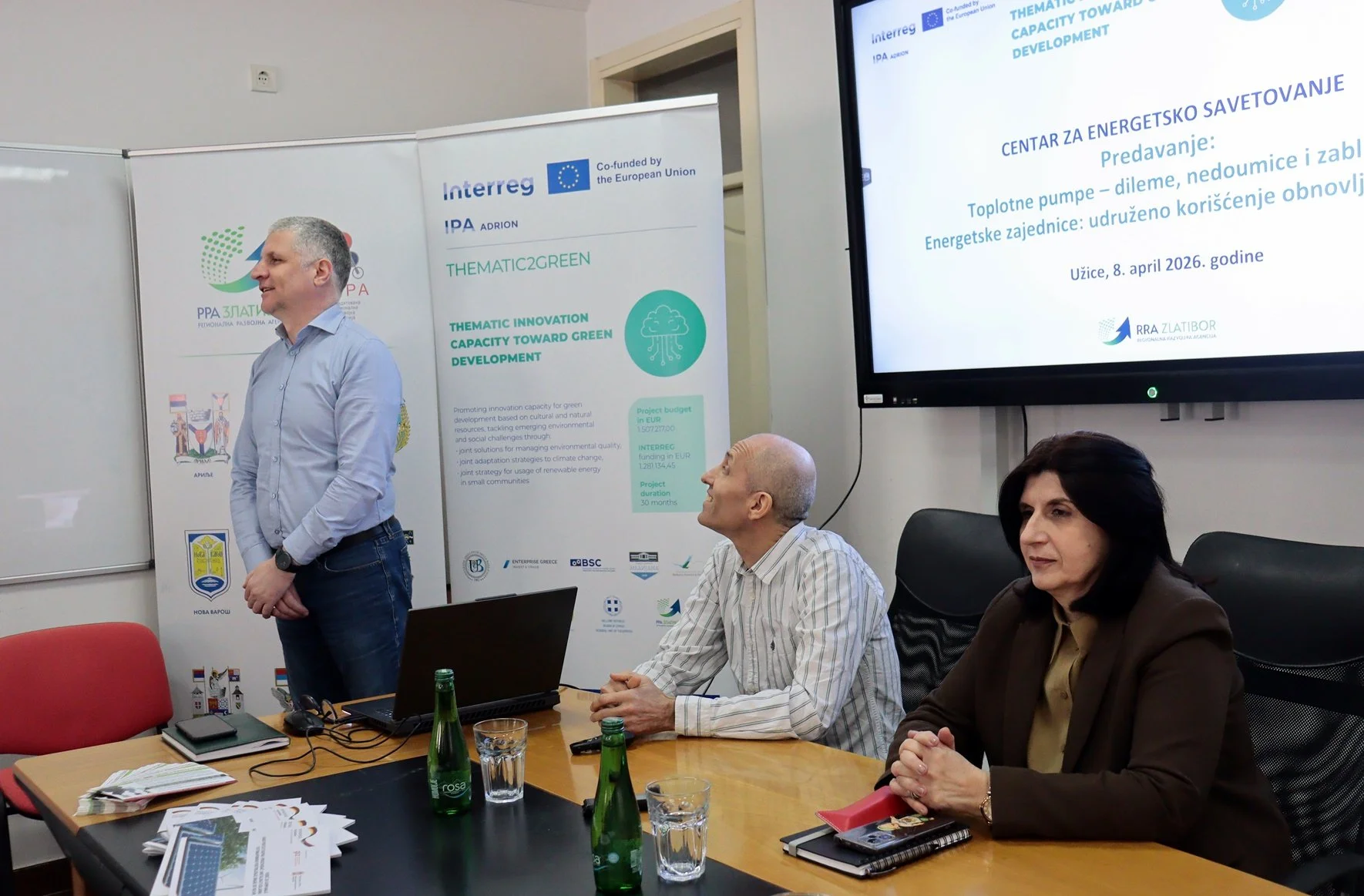
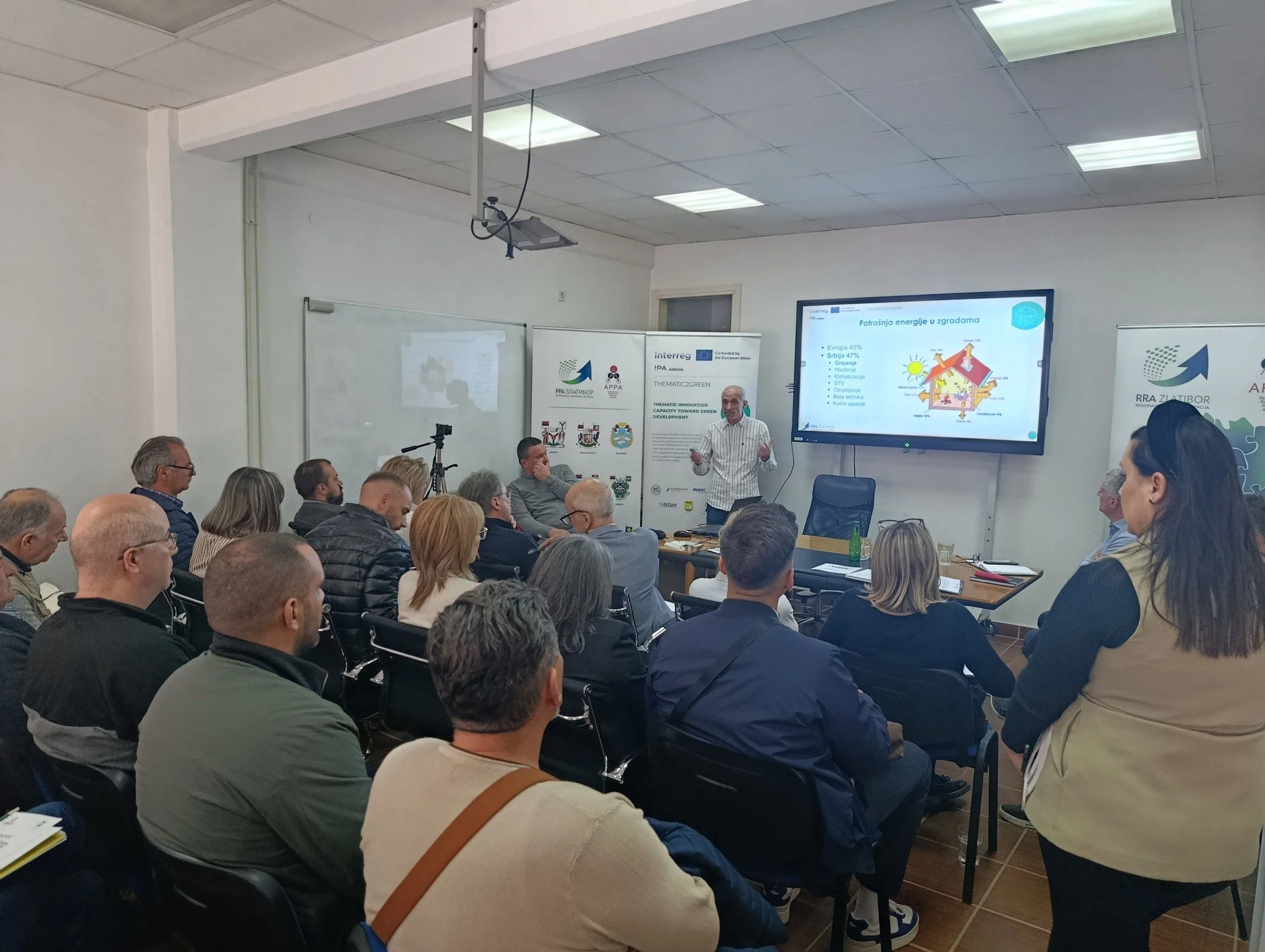
As part of the THEMATIC2GREEN project, funded by the Interreg IPA ADRION programme, PET recently held a public lecture at the Energy Advice Centre in Užice titled “How Do Heat Pumps ‘Pump’ Heat?”.
The event was dedicated to one of the most promising technologies for efficient heating and cooling, providing unbiased technical advice to help households distinguish between marketing promises and real-world performance. This is especially critical for communities in marginalized areas that often face higher energy costs and have fewer opportunities to access reliable support.
How Do Heat Pumps Actually Work?
Despite the name, a heat pump doesn't "create" heat in the traditional sense like a gas or wood boiler. Instead, it works much like a refrigerator, but in reverse.
The Extraction Process: The system extracts existing thermal energy from the outside environment - air, ground, or water.
The "Pump" Mechanism: Using a specialized refrigerant cycle and a compressor, it elevates the temperature of that extracted energy and "pumps" it into your home.
Efficiency: Because the system moves heat rather than generating it from scratch, it is incredibly efficient. For every 1 unit of electricity used to run the compressor, a heat pump can typically deliver 3 to 4 units of heat.
Choosing the Right System for Real Conditions
The lecture, delivered by Prof. Goran Vučković, PET co-founder and co-author of the national textbook on heat pumps, focused on making informed decisions before investing.
The discussion highlighted that while the technology is transformative, its success depends on several practical factors:
Prerequisites for Success: Not every home is ready for a heat pump immediately. Proper insulation and the right type of emitters (like underfloor heating or appropriately sized radiators) are key to achieving the promised efficiency.
Avoiding Common Mistakes: Participants learned to recognize the most common errors in planning and sizing a system, which often lead to higher-than-expected electricity bills.
Climate Suitability: We discussed how different types of heat pumps (air-to-water vs. ground-to-water) perform under the specific climatic conditions of Western Serbia.
Why This Matters for the Energy Transition
Heat pumps are a cornerstone of the energy transition because they allow us to electrify heating using renewable sources. Within the THEMATIC2GREEN framework, PET is committed to making this technology accessible and understandable.
Our goal is to move from "marketing-led" installations to "knowledge-led" investments, ensuring that energy-sustainable solutions provide genuine long-term relief for household budgets.